

Unscripted travel in Kumarakom: Let the destination surprise you
While growing up in Bengal, our guest, Ms. A, frequented tea shops from time to time during her corporate life. She told us that each and every neighbourhood had tea shops that buzzed with debates, discussions, and the exchange of ideas. From morning onwards, the tea kettles would be boiling with Darjeeling tea leaves, milk, and the breaking news of the day.
It was a déjà vu moment for her when she visited a local chayakada in Aymanam during her sunrise cruise with us back in 2024. The morning vibes at the Aymanam tea shop surprised her so much that she started looking for political wall flyers in Bengali, only to find the Malayalam ones. That brought home the realisation that she was, indeed, not in Bengal but in Kerala.
We wonder, would she have found the same thrill if she had sipped the tea inside our villa premises? The tea served here after she got back from the cruise would have been a warm, local experience, no doubt, but it would have missed the authenticity that came from visiting and sitting in the chayakada, observing all the buzz in her immediate surroundings.
Nowadays, different travel organisations are painstakingly preparing curated local experiences, where each and every activity is carefully managed. But we debate whether there is any space left for anything unexpected.
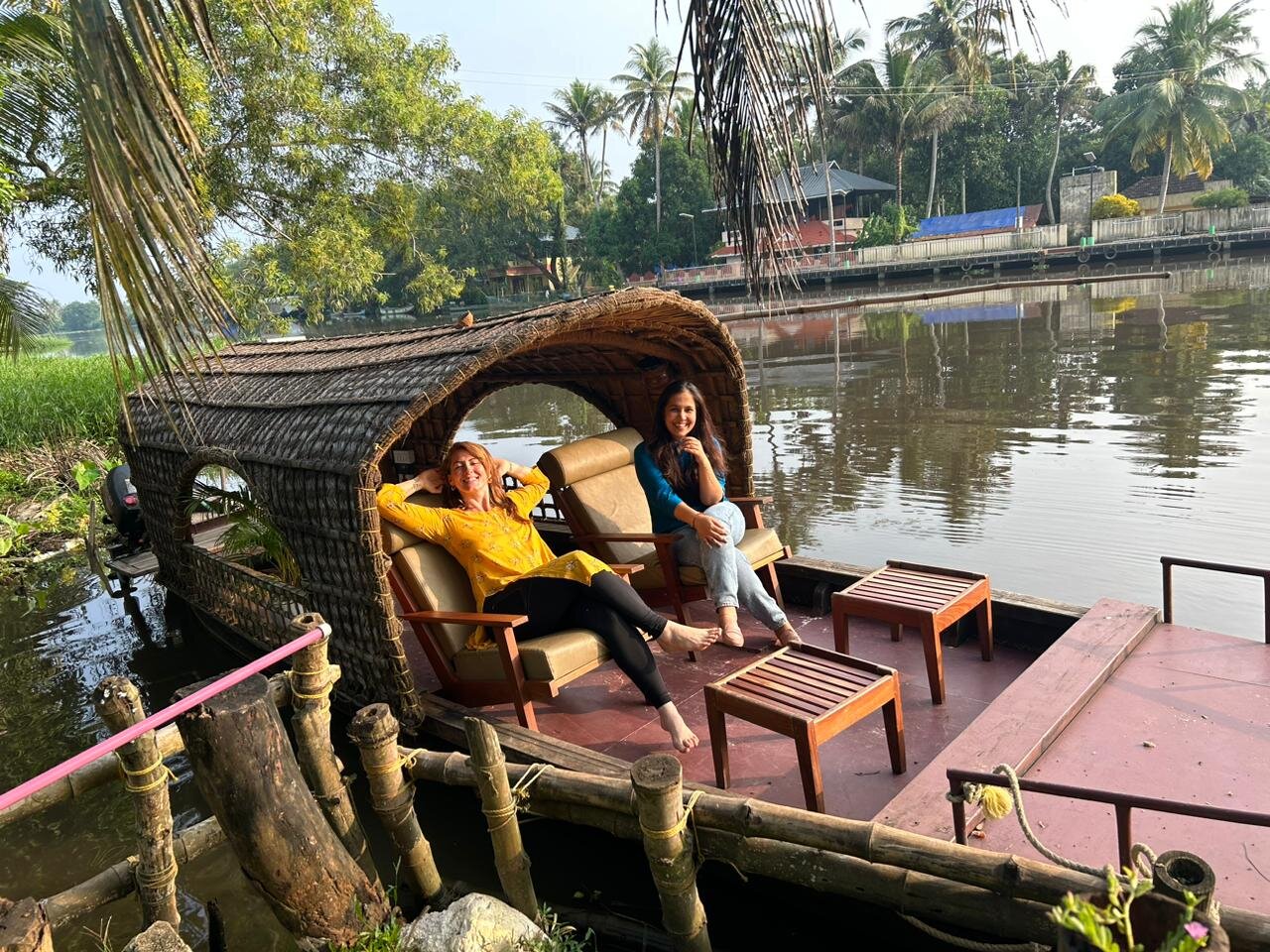
Kumarakom is not a place that reveals itself entirely through a list of attractions. Its character often lies in the quieter details that do not necessarily belong on an itinerary: a canoe appearing around a bend in a narrow canal, a farmer working beside the water, a fisherman returning with his catch, a neighbour waving from a passing boat, children making their way to school by water, the sound of birds across the fields, or a simple meal that somehow tastes different because you know where it came from.
None of these things necessarily need to be planned, as they simply happen. And these are exactly the little moments we carry home. Going ahead, in this blog, we aim to explore the different aspects of unscripted travel in Kumarakom.
When travel becomes a sequence of appointments
It’s not bad to plan a holiday because thoughtful planning can make travel easier, safer, and more meaningful. When you know where you are staying, the places you will be exploring, and the people who will be guiding you through them, it makes things convenient and smooth sailing.
The question we want to raise is how much of the experience needs to be predetermined. With predetermined schedules, a holiday can quietly become a sequence of appointments.
Each and every time slot — breakfast, village walk, canoe ride, lunch, observing a local activity, sunset, dinner — gets fixed, and there’s hardly any scope to explore beyond that. In meticulously curated travel packages, everything gets ‘designed’ to deliver an experience. Amidst all these efforts, the essence of the place you are visiting can get lost, as a destination cannot only be defined by what you do or see, but also by how it unfolds in front of your eyes when you decide to pause or travel outside the schedules.
Spontaneous conversations that might touch your soul unexpectedly, a sudden splash of cool water on your face that comes from the canoe paddles, a whiff of aroma from the tempering of mustard seeds, chillies, and curry leaves hitting your olfactory senses, a winding route towards the market, and the warm afternoons when you can laze around sitting on the green grass, doing nothing but feeling the soft breeze from the canal close to your stay.
These moments are difficult to schedule precisely because their value comes from not being scheduled.
Kumarakom is not a sightseeing circuit
The Kumarakom backwaters are not simply beautiful scenery placed before a traveller; they are an integral part of everyday life in the villages surrounding the backwaters and the narrow canals.
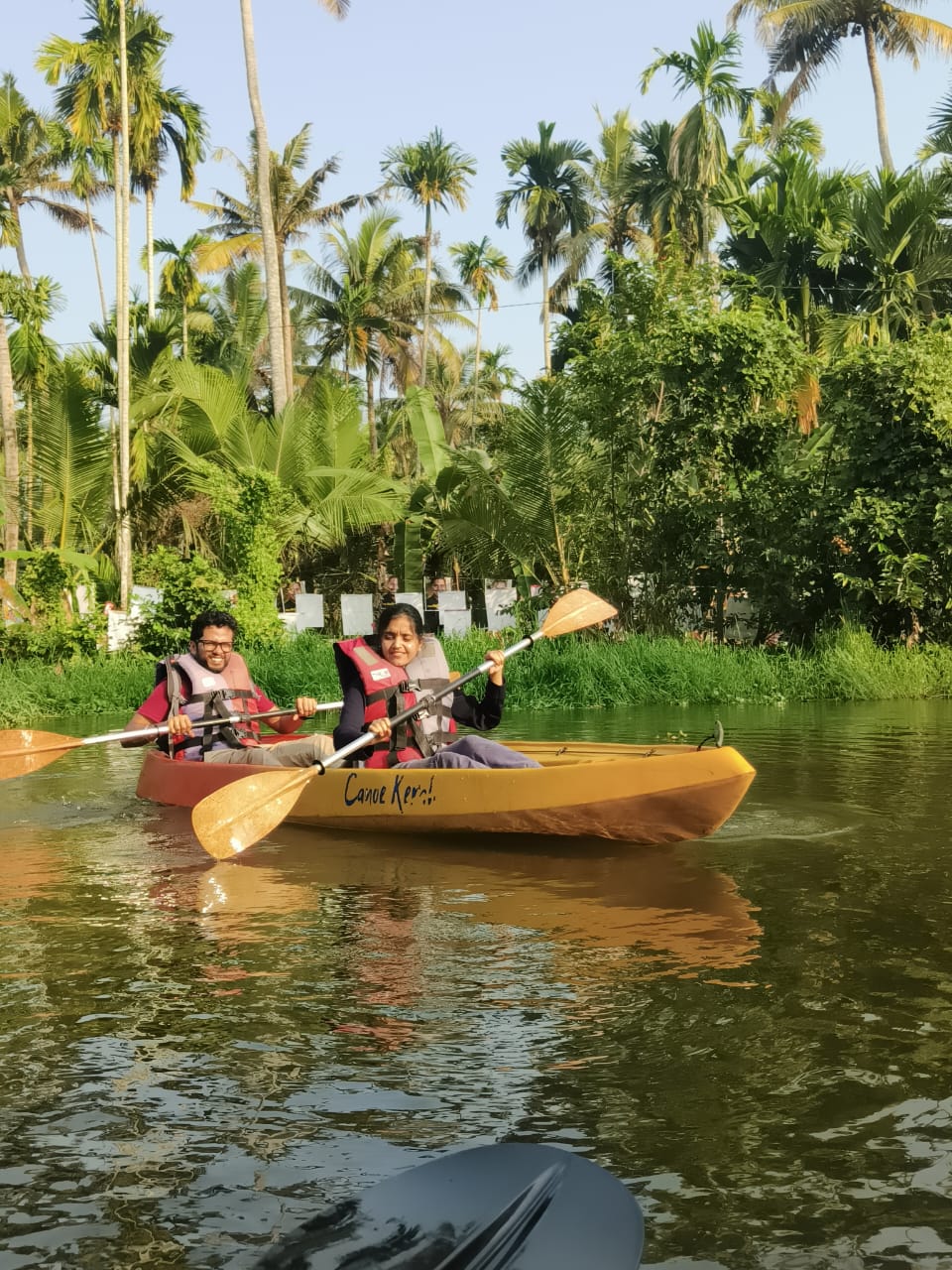
The waterways act as roads and workplaces, connecting homes, farms, markets, and communities. Canoes move through narrow channels not only because they offer an interesting route for visitors, but because people have been using these waterways as part of their lives for generations.
When you move slowly enough through the smaller canals, the landscape begins to reveal itself differently. You might find a house tucked behind the palms, a farmer working near the water, someone fishing, school children travelling by canoe, or someone calling out to someone else from the bank — none of these moments were arranged for the visitor, and perhaps that is precisely what makes them interesting. The destination does not stop being itself because a traveller has arrived.
This is very different from simply being taken from one sightseeing point to another. One is looking at Kumarakom, and the other is moving through Kumarakom.
So, what does “unscripted” really mean?
The word unscripted means unplanned, spontaneous to the point of being careless, or simply leaving everything to chance. But we decided to tweak the meaning a bit. For us, an unscripted experience can actually require considerable thought behind the scenes.
Someone still needs to know which waterways are navigable, which village paths are worth taking, who knows the landscape, where food comes from, whom to introduce a guest to, and how an experience can happen without disturbing the rhythm of the place.
We plan, and the planning moves behind the experience. Instead of deciding exactly what a traveller must see, it creates the conditions in which something meaningful can happen. That distinction matters to us. At Little Chembaka, we like the idea of curating access rather than curating outcomes.
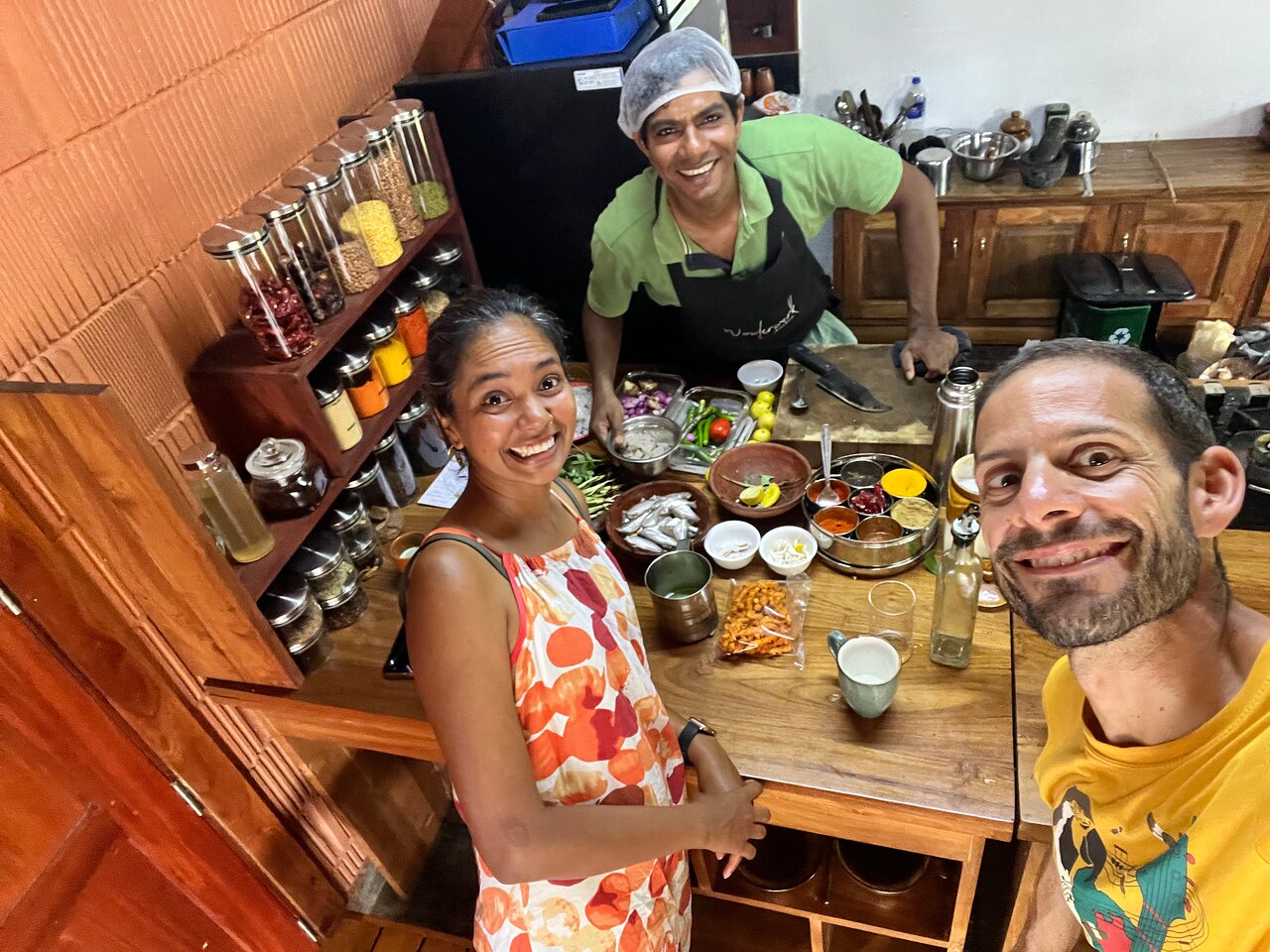
We can open a door, suggest a quieter canal, introduce someone, arrange a meal, take you into the village, and share what we know about the place, but what happens after that does not need to be completely predetermined.
You may notice something we did not expect you to notice; a conversation may take an unexpected turn; a canoe ride may become longer because there is something worth stopping for. The weather may alter the afternoon, or a meal may lead to conversations about an ingredient, a farm visit, or trying a family recipe.
The plan gets you there, but the experience is what happens afterwards.
The unique luxury of having nowhere to be
There is another ingredient that makes unscripted travel possible, which is time.
By ‘time’, we do not mean more days, but time within the day itself, to enjoy the luxury of having nowhere to be for a little while.
When every hour has been accounted for, there is very little room for curiosity. You cannot linger because something else is waiting. You cannot follow a conversation because the next activity begins in twenty minutes. You cannot take the longer route because lunch is already scheduled.
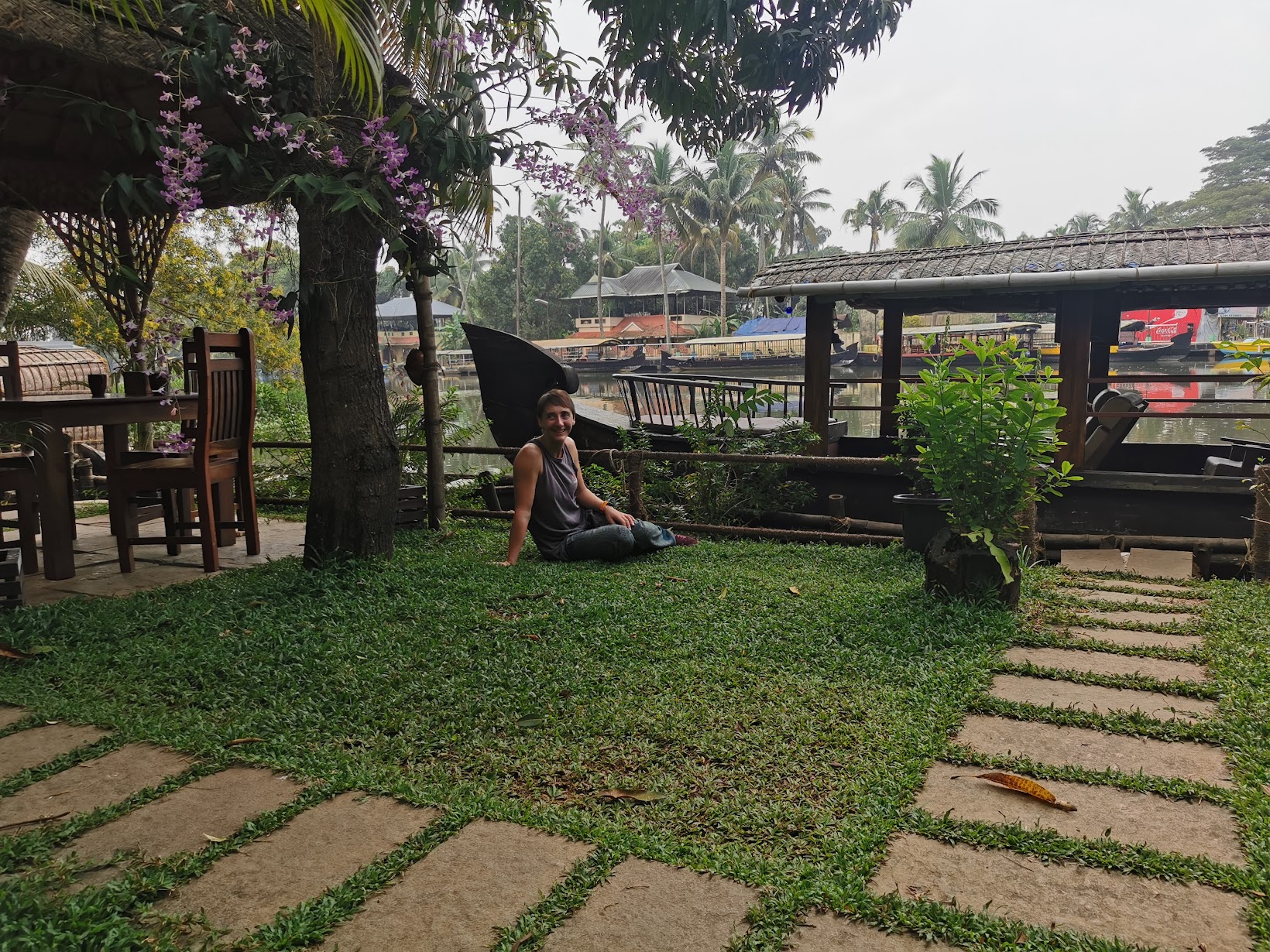
But when you give yourself some space, the relationship with a place can begin to change. The place that initially seemed unfamiliar begins to feel slightly more familiar as you start understanding the rhythm of the same place.
This is one of the reasons we believe that staying somewhere should not simply be about having a comfortable room to return to after spending the day elsewhere, as the stay itself can become part of how you understand a place.
When food doesn't need a script either
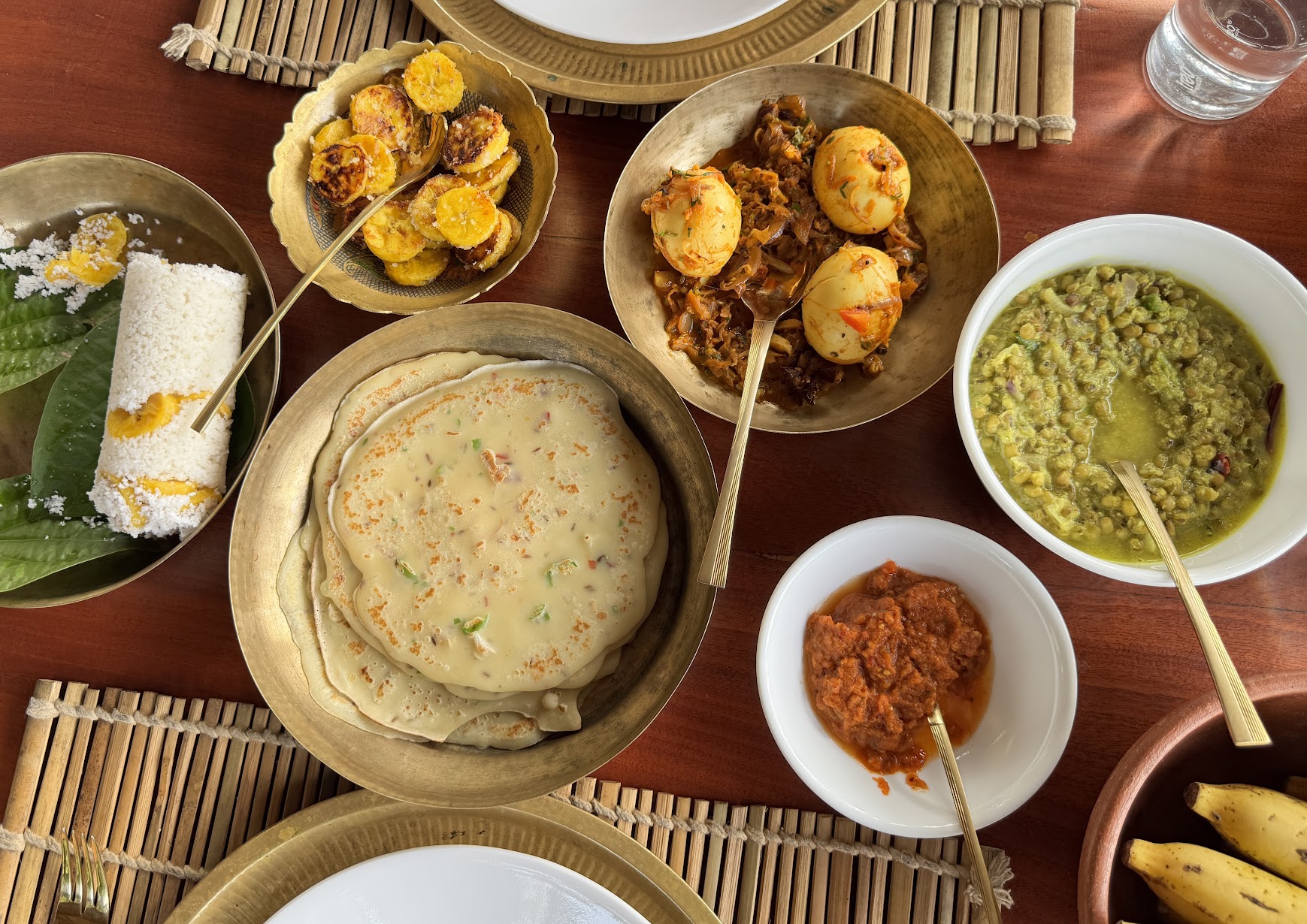
Food offers another interesting way of thinking about this. A fixed menu gives you certainty because you know what you are going to eat before you sit down. But a local kitchen can offer something else: the possibility of eating what the place has that day, depending upon the season and the fresh, local ingredients available on that particular day.
A meal can then become more than a scheduled part of an itinerary. It can potentially become a small encounter with the place, raising your curiosity and palate for a unique flavour profile.
That’s what local experiences are all about. They do not always arrive in perfectly predictable packages.
The people who make a place feel real
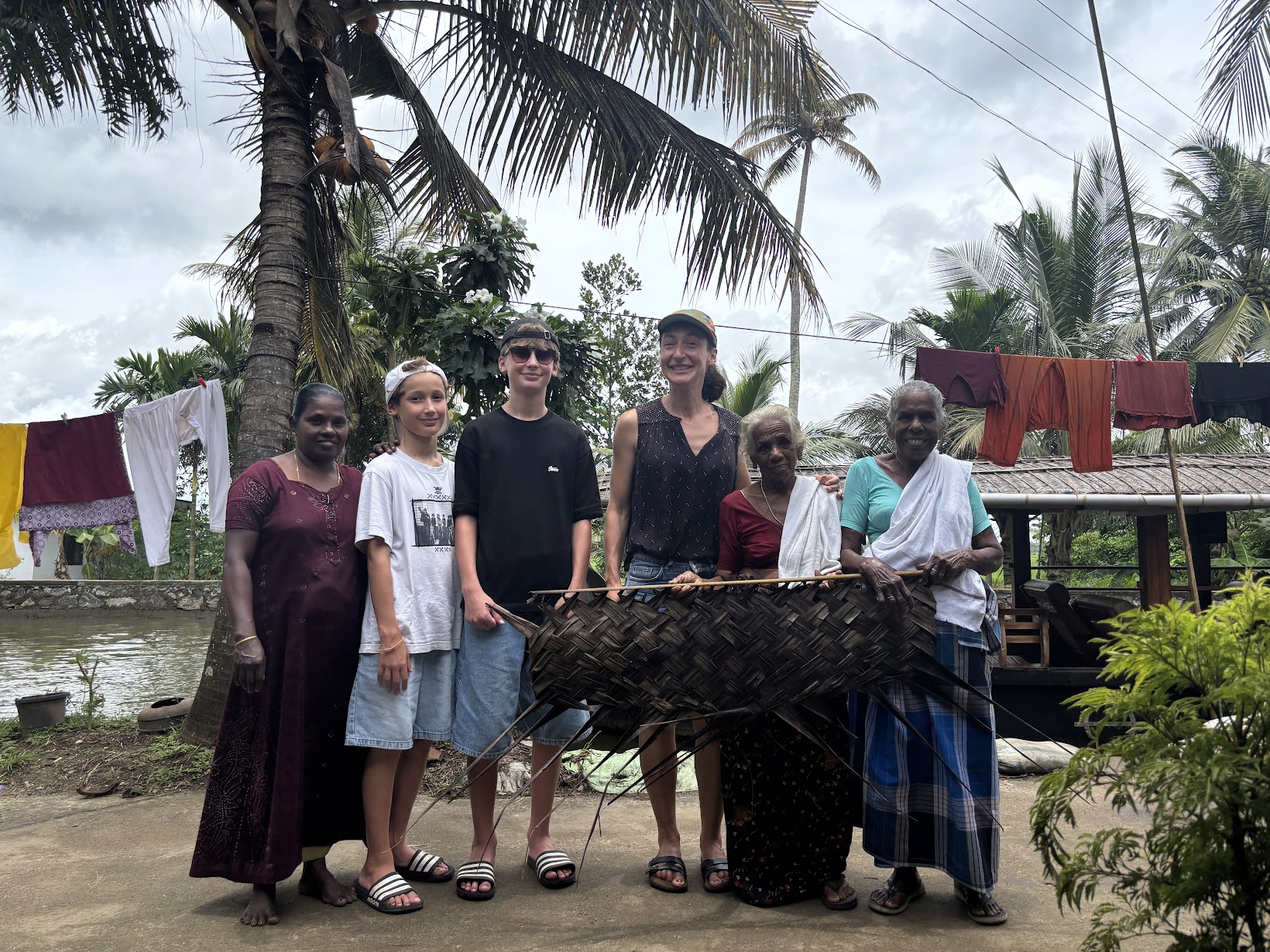
Ultimately, places are not experienced only through landscapes. They are experienced through people — the canoeist who knows which waterways to take, the farmer working beside the fields, the fisherman returning with the day's catch, the cook who understands how familiar ingredients should taste, the driver who knows the road beyond what a map can tell you, the local guide who can give context to something that might otherwise pass unnoticed, and also a craftsperson who has spent years learning something that cannot be understood through a short description.
These people are not props in a traveller's story, but a significant part of what gives a place its distinct character, and what they share cannot be neatly packaged into an “experience”.
The unexpected does not have to be spectacular
We often associate memorable travel with the spectacular — a perfect sunset, a rare bird, a photograph that makes everyone stop scrolling.
But the unexpected is not always spectacular. It can be little moments knitted into a day which might turn unforgettable later on. You did not arrive in Kumarakom specifically to find that moment; instead, you simply happened to be there when it occurred.
Leave some space for Kumarakom to surprise you
We do not mean to ask you to abandon your itinerary. You must know where you are staying, know who is taking you onto the waterways, know your local guides, and know that your experiences have been thoughtfully arranged.
All we ask is that you leave some room for an afternoon without a checklist, for taking the longer route, or for whiling away your time beside a quiet canal, sitting and talking to someone, trying a local food, and enjoying it when the weather changes the usual plan, hinting that it is time to switch off from all the pre-planning.
Let the destination have a say in how the day unfolds, since the most meaningful form of travel may not be about choosing between curated and completely spontaneous experiences.
We need the doorway, but not necessarily the script. Thoughtful curation can give us access to places, people, and experiences that we might otherwise never find. Local knowledge can provide context. Planning can make travel more responsible and respectful of the landscape and the people who live within it.
When we arrive, perhaps we should resist the urge to control every moment, as Kumarakom is not a collection of experiences waiting to be ticked off, but a living, breathing place where we can share with you curated access to an unscripted Kumarakom.